The second BioWare panel at Geek Girl Con titled, “Myth of the Female Gamer Perspective,” was an attempt to explore and generate discussion on what can be a polarizing topic. Karin Weekes (senior editor) moderated the panel while the panelists included were: Sheryl Chee (writer); Jessica Merizan (community manager); Sarah Hayward (cinematic designer); Melanie Fleming (localization producer) and Kris Schoneberg (level designer).
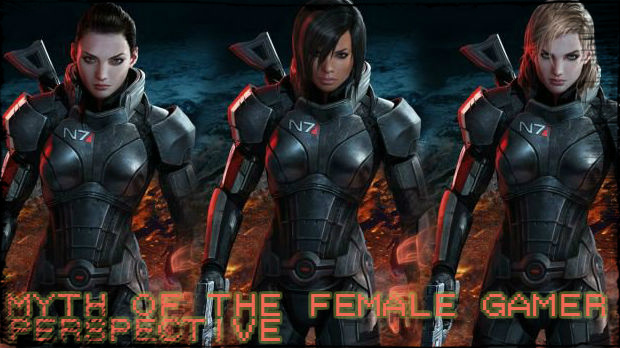
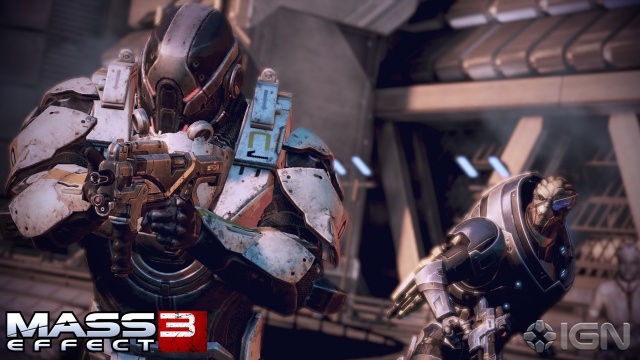
The first topic panelists discussed was the type of games they enjoyed. Melanie loves exploration in games, and will explore every corner of a map she can. Sarah enjoys hacking, slashing, blood, and guts, as long as it’s story-driven. Kris really likes puzzles and beating the heck out of other players via PvP in properties such as League of Legends and World of Warcraft. Even Karin, who didn’t do much co-op play before, has found a certain delight in the Krogan “smash and giggle” in Mass Effect 3 multiplayer. There was an overall emphasis on the enjoyment of a strong narrative and of RPGs – which seemed like a no-brainer given their employer—but, there were differences in the aspects of RPGs which were enjoyed. For example, Sheryl doesn’t like inventories and tweaking stats, while Jessica enjoys customizing the various details of her character. Karin pointed out how these responses demonstrate the “Four Pillars of Game Design” in terms of player types: Fighters, Explorers, Story and Puzzles. While there was common ground for the panel in terms of enjoyment of games, there were also differences. There was no one game type played which could be labeled as “girls only”, or a game type that only appealed to one type of personality.

There was an overall emphasis on the enjoyment of a strong narrative and of RPGs – which seemed like a no-brainer given their employer—but, there were differences in the aspects of RPGs which were enjoyed
This transitioned nicely in to a discussion of the audience for games: there is no “one type” of game, or aspect of one, which could please every single woman who might pick up the product. Sheryl relayed her experience crafting two of the female characters she has written, Leliana and Isabela. Some women loved Isabela’s liberated attitude towards sex, while others hated her and called her a slut. Jessica brought up the FemShep voting controversy (remember this?) to highlight audience differences. There were women thought it was cool and of course, others who thought it was a beauty contest which degraded the character. These examples highlighted the fact there is no female “hive mind” to appeal to when writing characters or marketing video games. One size doesn’t fit all.
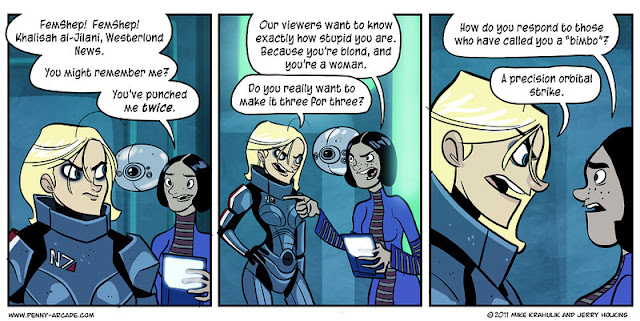
Source: PennyArcade.com
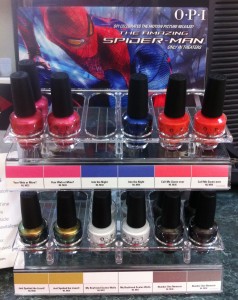
Following a lengthy discussion by the panelists, the audience was invited to participate by asking questions. The first was regarding the reluctance to market games in what is traditionally viewed as female outlets. The individual noted with the release of the latest Spiderman movie this summer, a nail polish had been released as part of the promotion. Jessica reiterated a point from last year that infighting within a community is one thing which makes companies wary when marketing products and why such things–like Spiderman nail polish–aren’t often seen: companies are afraid of blowback. Fans need to work on not tearing each other apart and simply enjoy the things they love.
 Another audience member asked the panelists for their thoughts about the “pink and sparkly” section of games stores. Melanie’s two-year old son apparently loves this part of the store. Melanie’s mother, who happened to be shopping with them, asked Melanie if she was it was okay the son was checking out those games. Melanie’s response was, “Sure, why?” While nothing was said, Melanie could see her mother was re-thinking her assumptions. This highlights generational issues when it comes to ideas about gender and what is socially appropriate. There are people making these promotional decisions who were instilled with ideas –pink is for girls, blue is for boys– and never considered might be boys who like pink and that’s okay!
The main take-away? Everyone is different, even –gasp–women are different from each other! While there are various elements of games which are enjoyed and different play styles, we’re all gamers at the end of the day. It’s something companies need to keep in mind when marketing and what fans need to remember when interacting with each other. People bring different experiences and perspectives to the table. They are not wrong for doing so and we need to embrace, or at least tolerate, this diversity. If we can’t get along, we’re never going to be able to push forward the progress we want in our entertainment. One of the most powerful examples of this, for me, was the FemShep trailer and box cover art that was released with Mass Effect 3. Fans, male and female, managed to generate enough support to convince BioWare to put out not one, but two trailers featuring their favorite protagonist; a character option whose public face had only been portrayed as a man until this spring. Change can happen as long as fans keep the big picture in mind and stop tearing each other apart over details.
 Natalie currently resides in the San Francisco Bay Area where she tries to balance full-time work and various nerdy hobbies. While being a huge Bioware fangirl, she also enjoys other video games (i.e. Arkam City, the Fable series) as well as comic books set in the DC universe



I wish I could have been at the con. In fact, I had no idea there was one just for the ladies. I agree with Natalie’s statement regarding our different and diverse perspectives. We all have our own opinions about EVERYTHING; not just about video games. I am a huge BioWare fan because of their ability to create intriguing and complex characters. They enrich the story, which I believe contributes to the overall success of the game. The one thing that attracts me to consider purchasing a game is whether or not I can play as a female character. There is nothing more satisfying than playing a woman who can kick ass. That is probably why I enjoy Mass Effect and Dragon Age so much (Rainbow Six: Vegas 2, Tomb Raider, and the Fable series are also highly enjoyable as a female lead character). I understand that many of us feel offended by the sleazy and unintelligent female characters with triple D busts. I honestly dislike these characters too. But I have to say that they will never be truly omitted from video games. If you’re highly offended, just don’t play the game. However, characters like Isabella from DA2 or even Miranda (from ME2 & 3) are more than sexy and sultry. They are beautiful women who have complex backgrounds (again, BioWare’s brilliance). I read comments on social forums regarding Ashley (from ME): she is racist, ugly, boring, etc. Ashley is another complex character who is quite interesting once you get to know her and peel back the layers. You learn she is spiritual, carries a heavy burden, and is extremely loyal to her family. I only wish many other people, including female gamers, would experience these characters in this manner. I think their gaming experiences would be more enjoyable and they would be less likely to judge a female character as a slut or a racist.
Excellent reply! And we agree, Bioware writes female characters incredibly well.
By the way, as soon as I got home from Geek Girl Con, I ordered a 4-color sampler of the Spiderman nail polish – it is SO COOL! I’m partial to the blue “Into the Night”, and my sons love the silver “Number One Nemesis” and asked me to paint their 3 middle fingers so they could have “Wolverine blades”. At least they’re keeping it within the Marvel family. 😉